Private Tour Braga
Touristic and Historical Introduction to Braga: Braga, where faith, history and tradition shape the soul of the Minho region.
Braga is one of Portugal’s oldest cities, with origins in Roman times and a strong religious heritage that earned it the name “Portuguese Rome.” Filled with sanctuaries, churches, Roman ruins, and Baroque landmarks, the city blends history with a young, vibrant atmosphere. Its elegant streets, gardens, and iconic monuments make Braga a captivating and authentic destination.
History of Braga
Braga, known as the “Portuguese Rome,” is one of the oldest cities in Portugal, founded by the Romans in 16 BC as Bracara Augusta. For centuries, it was an important religious and political center in the Iberian Peninsula. During the Middle Ages, it became the seat of the Primate Archbishop, gaining significant spiritual influence. The city preserves remarkable monuments such as Braga Cathedral, the Sanctuary of Bom Jesus, and Sameiro. Today, Braga blends tradition with modernity, bringing together historical heritage, university life, and a vibrant cultural scene.
Top Places to Visit in Braga
Bom Jesus do Monte Sanctuary
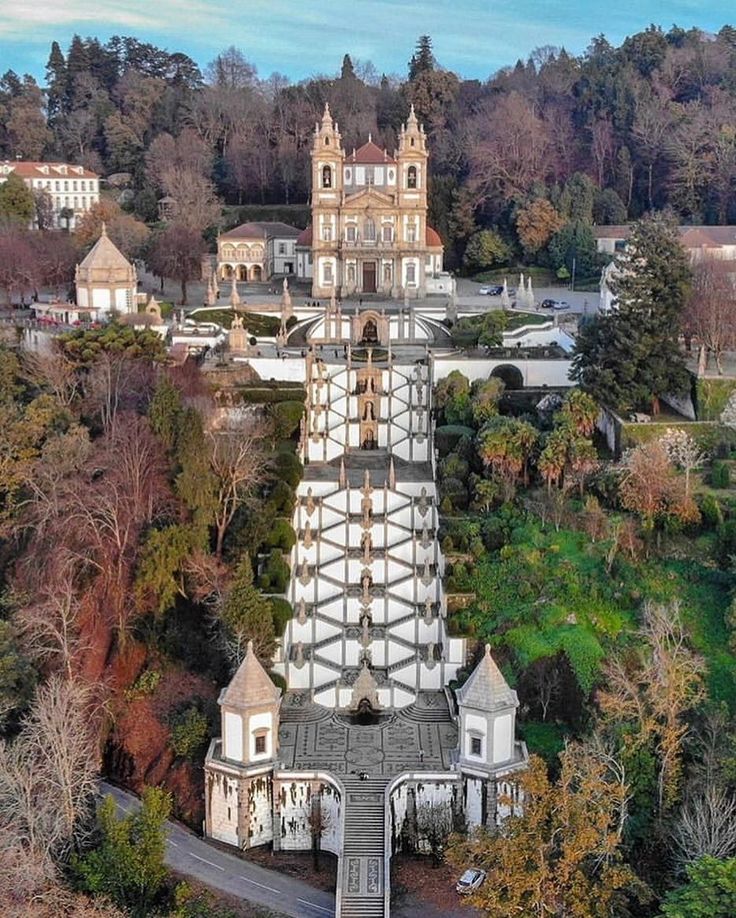
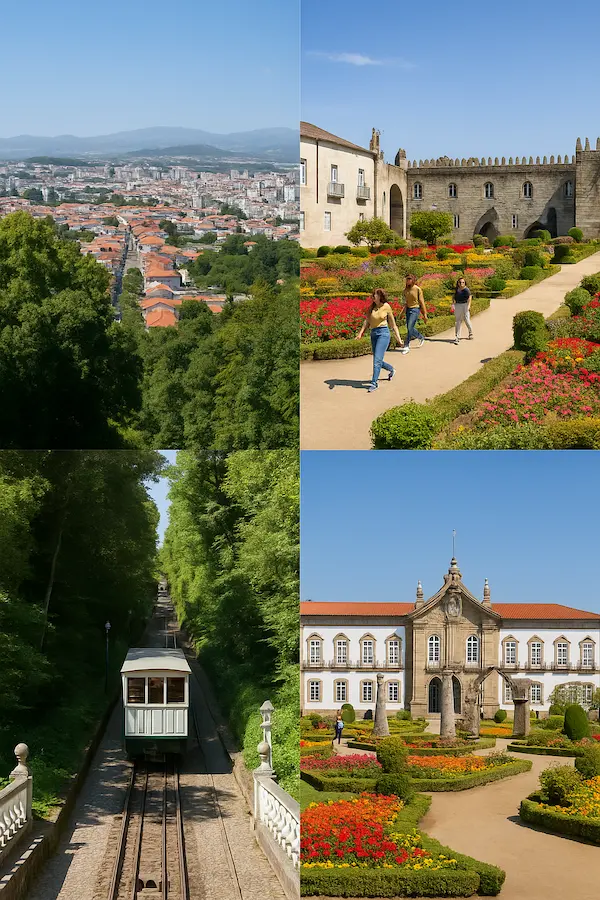
The Bom Jesus do Monte Sanctuary is one of Braga’s most iconic landmarks and one of Portugal’s most important pilgrimage sites. Its origins date back to the 14th century, but the current church and the famous stairway were built between the 18th and 19th centuries. The monumental staircase, 116 meters long and rich in symbolic details, offers stunning panoramic views over the city. The church is a magnificent example of Baroque architecture, with an impressive façade and a richly decorated interior. A unique hydraulic funicular carries visitors up the hill, offering a different and charming way to reach the sanctuary.
Braga Cathedral (Sé de Braga)
Founded in the 11th century, Braga Cathedral is one of the oldest in Portugal and a major example of Romanesque architecture. It played a crucial religious and political role throughout the centuries. The São Miguel Chapel is the oldest part of the cathedral, showcasing beautiful Romanesque details. The cloisters offer a peaceful interior space with columns and arches that create an impressive structure.
Monastery of São Martinho de Tibães
Founded in the 11th century, the Monastery of São Martinho de Tibães was one of the largest and most influential Benedictine monasteries in Portugal. Its church features an imposing façade and a richly decorated Baroque interior. The monastery museum exhibits sacred art and historical objects related to monastic life. The surrounding gardens offer tranquil paths, ideal for relaxing walks.
Arco da Porta Nova
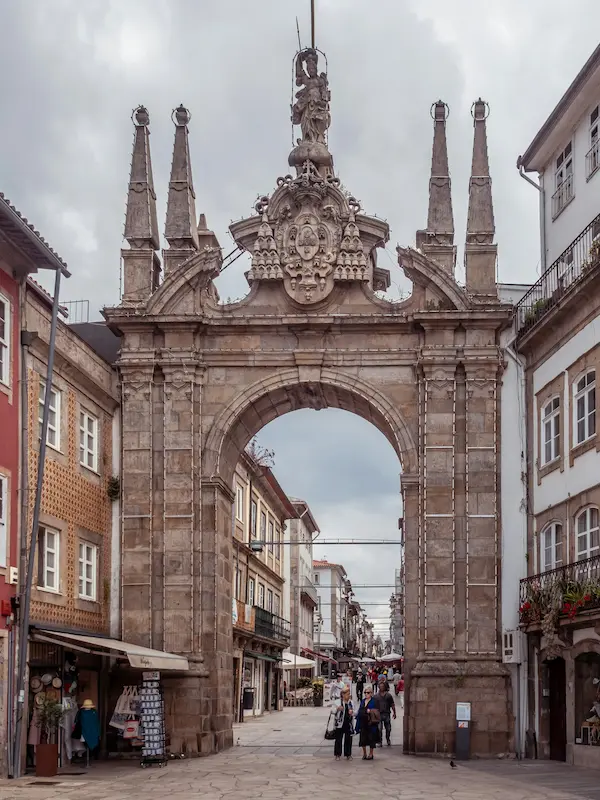
The Arco da Porta Nova, built in the 18th century, is one of Braga’s most iconic landmarks. This monumental gate was once part of the city’s old defensive walls and now marks a striking entrance to the historic center. Decorated with neoclassical details and located near Praça da República, it’s an excellent starting point to explore the surrounding cafés, shops, and vibrant streets.
Roman Baths of Alto da Cividade
The Roman Baths of Alto da Cividade are one of Braga’s most important archaeological sites, dating back to the 1st and 2nd centuries AD. This bath complex reveals the grandeur of ancient Bracara Augusta, with steam rooms, pools, and bathing areas. A must-see for anyone interested in the city’s authentic Roman heritage.
Church of São Paulo
The Church of São Paulo, built in the 16th century originally as a convent, features a rich Mannerist façade and an interior adorned with impressive tiles and gilded woodwork. Both the azulejos and the main altar stand out for their artistic detail and beauty.
Santa Bárbara Garden
Located in the historic center, the Santa Bárbara Garden is one of Braga’s most charming green spaces. Created in the 19th century, it is known for its carefully maintained flower beds and for offering a picturesque view of the remaining medieval section of Braga Castle.
Braga Castle
Braga Castle, from medieval origins, was built to defend the city from invasions. Although much of the original structure has disappeared, visitors can still explore its walls and towers, which offer excellent views of Braga. Inside, exhibitions provide insight into the history of the castle and the city.
3 Reasons to Take a Tour in Braga
Historic and Monumental City: Braga is one of Portugal’s oldest cities, home to treasures such as Braga Cathedral, the Bom Jesus Sanctuary, and the Sameiro Basilica.
Tradition and Spirituality: Known as the “Portuguese Rome,” the city breathes faith and culture, with unique religious festivities and UNESCO-listed heritage.
Beauty and Quality of Life: With gardens like Santa Bárbara, lively streets, and traditional gastronomy, Braga offers an authentic and welcoming experience.
Suggested Itinerary for a Tour in Braga
Morning – Start with a visit to the Bom Jesus do Monte Sanctuary, followed by Braga Cathedral and the Braga Art Museum.
Lunch / Early Afternoon – Explore the Monastery of São Martinho de Tibães, then take a relaxing walk through the Santa Bárbara Garden. Afterwards, visit the Palace of the Archbishops and the Arco da Porta Nova.
Late Afternoon – Conclude your day by exploring Braga Castle and, if time allows, make a final stop at the Church of São Paulo.
CONCLUSION
Visiting Braga means immersing yourself in the history, faith, and beauty of one of Portugal’s most enchanting cities. With ancient monuments, vibrant gardens, and living traditions, every corner reveals a unique discovery. A tour of Braga offers the perfect balance between past and present, creating unforgettable memories for every traveler.







CONTACTS
(* Call to the national mobile network PT)
SOCIAL MEDIA
Copyright @Primus V&P 2025 DeLuxe VIP LIsboa